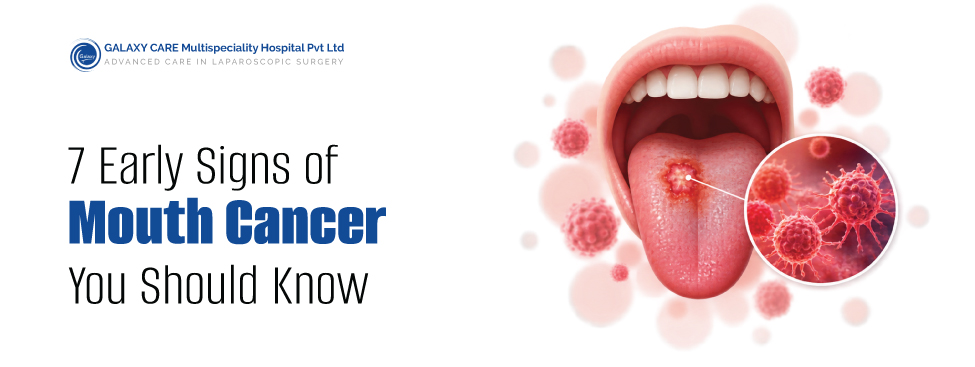
7 Early Signs of Mouth Cancer You Should Know
You may think it is just a small ulcer. Maybe you bit your cheek, or a sharp tooth has been rubbing against your tongue. A rough patch, a little swelling, a sore spot that stings with spicy food. Most of us wait for it to settle, and most of the time it does.
But here is something worth knowing. Sometimes a change in the mouth stays, and that is when it deserves a closer look. Learning the early signs of mouth cancer is not about expecting the worst. It simply helps you get an unusual change checked sooner, when treatment options are usually wider. Let us help you understand mouth cancer/oral cancer and what are 7 early signs of mouth cancer you should know.
What Is Mouth Cancer?
Mouth cancer, also called oral cancer, develops when cells inside the mouth begin to grow abnormally, forming a sore, patch, or lump that does not heal the way it should. It can appear on the lips, tongue, gums, inner cheeks, roof of the mouth, floor of the mouth, or other parts of the oral cavity.
Tobacco use and heavy alcohol intake are among the most well established risk factors, but mouth cancer can also affect people who have never used either. One advantage is that the mouth is easy to see and examine, which means changes are often noticed earlier than in cancers that develop deeper inside the body.
7 Early Signs of Mouth Cancer
1. A Mouth Ulcer That Does Not Heal
Most mouth ulcers caused by a bite, a hot drink, or a rough tooth heal within one to two weeks. One that lasts beyond three weeks, or keeps returning in the same spot, should be examined. A non-healing sore is among the most common early stage mouth cancer symptoms. It often does not hurt at first, which is why many people ignore it for months. Painless does not always mean harmless.
2. A White or Red Patch in the Mouth
Look for a white patch that cannot be wiped away, a red and velvety patch, or a mix of both. These can appear on the tongue, gums, or inside the cheeks. Most patches turn out to be harmless, often linked to irritation, infection, or tobacco use. Still, some oral lesions can be precancerous, so a patch that stays for more than a few weeks is one of the signs of oral cancer worth showing a doctor.
3. Unexplained Bleeding or Pain
Bleeding in the mouth without an obvious injury, a tender spot that does not go away, or pain in one area that keeps returning can all be significant. Some people also notice ear pain on one side without any ear problem.
These mouth cancer symptoms are easily mistaken for gum trouble or a toothache. That is why a persistent, unexplained pain deserves proper evaluation instead of another round of painkillers.
4. A Lump, Thickening, or Swelling
Run your tongue gently over your gums and inner cheeks. A new lump, a thickened area, or swelling that does not go down can be one of the early symptoms of mouth cancer. Dentures that suddenly stop fitting well can also be a clue. Many lumps are harmless, such as cysts or infected glands. But a lump that keeps growing, or one you can feel in the neck, needs assessment.
5. Difficulty Chewing, Swallowing, or Moving the Jaw
If chewing feels harder than usual, food seems to catch when you swallow, or your jaw feels stiff, do not brush it off. Ordinary things like a sore tooth or muscle strain can cause this too.
The concern is when the change lasts for weeks or slowly gets worse. Everyday mouth function is something you should not have to work around.
6. Numbness or Unusual Sensation
A numb lip, a tingling tongue, or a patch inside the mouth that feels “switched off” without a clear reason is worth attention. Nerve signals in the mouth do not usually go quiet on their own, so a lasting change in sensation is not something to brush aside. Dental work can cause temporary numbness, and that is normal, but it should fade within a reasonable amount of time. If the sensation has no obvious cause, keeps coming back, or simply does not go away, it is worth asking a doctor to look into it rather than waiting to see if it resolves by itself.
7. A Persistent Change in Voice or Difficulty Speaking
Slurred speech, a hoarse voice that will not clear, or trouble moving the tongue the way you normally would can sometimes be linked to cancers of the mouth or nearby areas. These changes happen because growths can affect the muscles and nerves involved in speech, though this is just one of several possible explanations.
In most cases, a cold, laryngitis, or acid reflux is a far more likely cause, and these tend to settle on their own. The important thing is not to panic over every scratchy voice, but to pay attention if the change lasts beyond a few weeks or keeps returning without a clear reason.
When Should You See a Mouth Cancer Specialist?
A good rule of thumb: if something in your mouth feels off and has not settled within a reasonable amount of time, it is worth getting checked rather than waiting it out. You do not need to be certain something is wrong to book a visit. A mouth cancer specialist can usually tell within one simple examination whether it is minor or needs a closer look.
You also do not have to wait for symptoms to show up before paying attention. If you use tobacco or alcohol regularly, or if mouth cancer runs in your family, it helps to get into the habit of regular checkups rather than only going in when something feels different. Either way, a short consultation is a small step that can save you a lot of worry later.
Also, when mouth cancer is diagnosed, you need trusted care by your side.
CLICK HERE to check out this review by our patient who defeated mouth cancer with his will power, our treatment and holistic cancer care.
How Is Mouth Cancer Diagnosed?
Mouth cancer diagnosis usually starts with a simple examination. The doctor will look at and feel your mouth and neck for anything unusual, and ask about your symptoms, how long you have had them, and your history with tobacco or alcohol use. If anything looks like it needs a closer look, imaging tests may follow to get a clearer picture.
If something suspicious is found, the next step is usually a biopsy, where a tiny sample of the affected area is taken and examined under a microscope. This is the only way to confirm a cancer diagnosis, and it is worth remembering that it is a routine step in the process, not a sign that the worst has already been confirmed.
Get Persistent Mouth Changes Checked in Pune
Living with a lingering worry about your mouth is tiring. You do not have to keep guessing, and you do not have to wait until it becomes hard to ignore. Paying attention to the early signs of mouth cancer is one of the most sensible things you can do for yourself or someone you love.
At Galaxy Care Hospital, the best mouth cancer hospital in Pune, you can get clear answers from a team that treats cancer every day. Every case is reviewed with the same care, whether it turns out to be something minor or something that needs a closer look.
Consult Dr. Shailesh Puntambekar, an experienced surgical oncologist, for a proper evaluation and honest guidance on what to do next. He has successfully treated high-risk mouth cancer cases and is trusted by patients for his careful, experienced approach, one that puts your comfort and understanding first at every step.
There is no need to carry the worry alone or wonder what the change in your mouth might mean. Book a consultation and get the clarity you deserve, along with a clear plan for whatever comes next.