When Can You Walk, Drive, Work & Exercise After Cancer Surgery?
Once the surgery is over and the initial relief settles in, a different set of questions often comes up. When can I walk on my own? When can I drive again? When can I return to work? And when can I start exercising?
These are very natural questions. After all, surgery is an important part of cancer treatment, but recovery is also about getting back to the things that make everyday life feel normal again.
At Galaxy Care Hospital, we offer cancer surgery in Pune and understand that every patient’s recovery looks different. The type of surgery, your overall health, how your body is healing, and your doctor’s advice all play a role. Let us look at four practical parts of recovery after cancer surgery: when can you walk, drive, work, exercise, and what can influence when you can safely get back to each one.
When can you walk after cancer surgery?
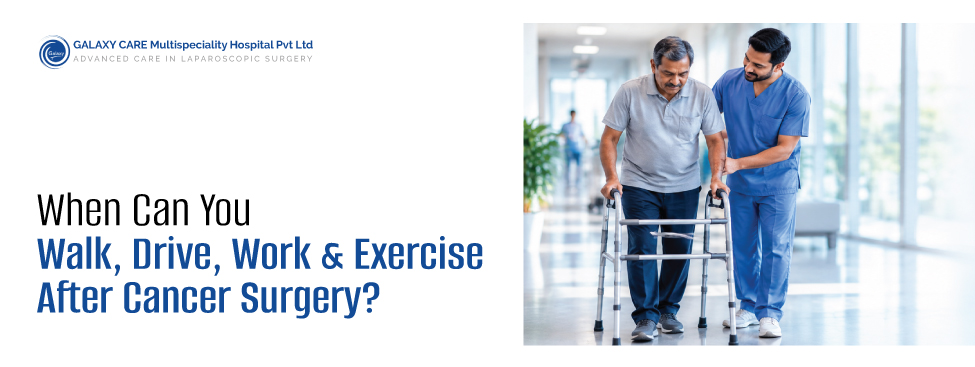
The short answer is that walking is usually encouraged early, often within a day of surgery, but the exact timing depends on your surgery and how your body is healing.
Many surgical teams like to get patients moving as soon as it is safe, even if it is just sitting up in bed or taking a few steps with support. Early, gentle movement helps blood circulation, supports lung function, and can lower the risk of complications like blood clots. It also tends to help the digestive system get back on track sooner.
Pain levels, wound healing, and overall strength all play a role in how fast this progresses. Some patients feel ready to walk longer distances within days or a week. Others, especially after more extensive surgery, may need a longer runway. If you notice increasing pain, swelling, redness around the wound, fever, or unusual breathlessness while walking, that is a sign to stop and get in touch with your doctor rather than pushing through it.
This is where recovery becomes personal. Your cancer surgeon and care team are the ones who can tell you how much activity is appropriate at each stage, based on your specific procedure and how you are healing.
When can you drive after cancer surgery?
The direct answer here is that driving usually needs to wait until you are pain free enough to move comfortably and react quickly, and this is a decision best confirmed with a leading cancer surgeon.
Driving is not just about being able to sit in a car. It involves being able to sit comfortably for the duration of a trip, turn and check your mirrors and blind spots without hesitation, control the steering wheel and pedals confidently, and perform an emergency stop if needed. If any of these feel difficult or painful, you are probably not ready yet.
Medications also matter. If you are taking pain relief or other medicines that can cause drowsiness or slow your reaction time, driving is not advisable, even if you feel physically capable otherwise.
The type and location of your surgery make a difference too. Someone who has had a more localized procedure, such as laparoscopic cancer surgery, may feel ready to drive sooner than someone recovering from a larger operation. Feeling better is a good sign, but it does not always mean your body is ready for everything, and driving is one of those areas where it pays to be cautious. Your cancer surgeon will usually give the go ahead once your mobility, pain control, and alertness are all in a safe place.
When can you work after cancer surgery?
There is no fixed time for returning to work after cancer surgery. If your job is mostly desk based, you may be able to return sooner, sometimes within a few weeks, once pain is manageable and energy levels start to stabilize. If your work involves physical labor, heavy lifting, or long hours on your feet, it usually takes longer, since the body needs more time to safely handle that kind of demand.
Fatigue after cancer surgery is common and often underestimated. Even if you feel physically capable of certain tasks, tiredness can affect concentration and stamina for weeks. Whether further treatment, such as additional therapy, is planned also factors into the timing.
Many patients find that a phased return to work, starting with reduced hours or lighter duties before building back up, works better than jumping straight back into a full schedule. This is not necessary for everyone, but it is worth discussing with your doctor if your job is demanding. A surgical oncologist’s assessment of your healing, combined with an honest look at your energy levels, is the best guide here.
Check out Cancer Recovery Advice from Pune’s Leading Surgical Oncologist.
When can you exercise after cancer surgery?
Exercise is usually reintroduced in stages after cancer surgery, starting with gentle movement and building up only once your surgical team confirms it is safe.
It helps to think of activity as a ladder. Gentle movement and walking usually come first. Moderate activity, like longer walks or light household tasks, tends to follow once initial healing is well underway. Strength training, high impact exercise, and heavy lifting generally come later, and only after your surgeon has reviewed your healing and given clearance.
Exercise can become an important part of long term cancer recovery, supporting strength, mood, and overall wellbeing. But restarting too soon, or jumping straight into strenuous workouts because you feel better, can affect wound healing or put unnecessary strain on your body. Wound healing, pain levels, fatigue, the type of surgery, and any other treatments you are undergoing all influence how quickly you can safely increase activity.
What is safe for one patient may be at four weeks may not be appropriate for another until much later. Your cancer surgeon knows your case and can suggest you on when and how to progress.
Cancer Recovery Is About More Than Surgery
Cancer surgery is a major milestone, but recovery is really about everything that comes after it. Walking again, getting back behind the wheel, returning to work, and easing back into exercise are all part of rebuilding your daily life and your quality of life.
There is no single timeline that fits every patient, and that is not something to worry about. It simply means your recovery plan should be built around you, your surgery, and your health, with guidance from a surgical oncologist in Pune who understands your case closely.
At Galaxy Care Hospital, recovery planning is treated as a genuine part of cancer care, not an afterthought once the operation is over.
Planning cancer surgery or unsure about your recovery timeline? Consult Dr. Shailesh Puntambekar at Galaxy Care Hospital and get a personalized cancer recovery plan.