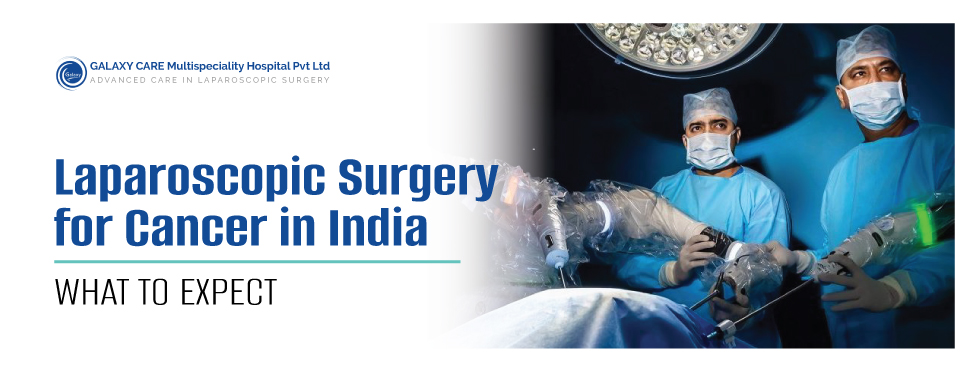
Laparoscopic Surgery for Cancer in India: Who Can Benefit and What to Expect
If you or someone you love has just been told that surgery is part of the cancer treatment plan, your mind probably jumps straight to the hospital stay, the scar and the weeks of recovery that might follow. That thought is completely normal.
Well, not every cancer surgery today means a large open incision. In selected patients, the tumour can be removed through a few small cuts instead. That advanced surgical approach is what people mean by Laparoscopic Surgery for Cancer in India. Let us walk you through who it may help and what the process actually looks like.
What Is Laparoscopic Cancer Surgery?
Think of it as keyhole surgery for cancer. Instead of one large cut, the surgeon works through a few small incisions, guided by a thin camera and fine instruments (laparoscope), to remove the tumour from inside the body.
In open surgery, that one larger incision gives the surgeon a direct, hands on view. With laparoscopic cancer surgery, the camera sends a magnified image to a screen, and the surgeon operates while watching that screen. The outcome goal does not change: the cancer needs to come out completely, along with any surrounding tissue or lymph nodes that need to be removed with it.
Not every cancer, and not every patient, is a fit for laparoscopic surgery. It comes down to the type of cancer, its stage, where it sits in the body, any surgeries you have had before, your general health and, ultimately, your surgical oncologist’s judgement.
Who Can Benefit From Laparoscopic Cancer Surgery?
Well, as we said, Laparoscopic cancer surgery is never a one size fits all decision, and your cancer surgeon will only suggest it if it can be done without compromising your cancer treatment.
A few things your surgical team will look closely at:
- The type and location of the cancer
- How advanced the disease is
- Whether the tumour can be removed safely through this approach
- Any previous abdominal or pelvic surgeries you have had
- Your general fitness for surgery
- How experienced the surgical team is with this technique
Not every cancer patient needs the same approach, and that is actually a good thing. Minimally invasive cancer surgery is only ever recommended when it can treat the cancer just as effectively as open surgery would. If your surgeon suggests an open operation instead, that is not a step backward. It simply means that, in your case, it is the safer and more effective path.
What Are the Benefits of Laparoscopic Cancer Surgery?
For an eligible laparoscopic surgery cancer patient, this approach can mean a smaller scar, less pain and getting back on your feet sooner. That said, these are possibilities, not promises, and recovery looks different for every patient.
Where it is suitable, here is what patients often experience:
- Smaller incisions, and smaller scars once healed
- Less pain in the days after surgery, for many patients
- Lower blood loss during appropriate procedures
- Being able to move around sooner
- A shorter hospital stay in some cases
- A quicker return to everyday life for some patients
But here is the important part: your recovery still depends on the extent of your surgery, your overall health and your own body. A smaller incision does not mean a smaller operation underneath it, so it helps to go in with realistic expectations rather than comparing your recovery to someone else’s.
Which Cancers Can Be Treated With Laparoscopic Surgery?
You might be wondering if this applies to your specific diagnosis. In selected cases, types of cancer treated with laparoscopic surgery include cancers of the cervix, uterus, ovary, colon, rectum and stomach, along with some other abdominal and pelvic cancers. To be clear, that does not mean every cancer in these categories qualifies. Some examples where it may be considered, depending on your case:
- Cervical cancers
- Endometrial (uterine) cancers
- Ovarian cancers, in appropriate cases
- Colorectal cancers
- Stomach and other gastrointestinal cancers
- Other abdominal or pelvic cancers where this approach fits
Read More Details: Explore Types of Cancer Treated with Laparoscopic Surgery
What Can You Expect Before, During and After Surgery?
Not knowing what to expect is often more stressful than the laparoscopic cancer surgery itself, so let us walk through it in stages.
Before Surgery
This usually starts with a consultation and a close look at your reports. You may need imaging or further tests to confirm the stage of the cancer, along with an assessment of your fitness for surgery. Before deciding on surgery, there is one important question to answer: has your surgeon clearly explained the procedure, the risks, what recovery might look like, and what the alternatives are? You deserve those answers before you decide anything.
During Surgery
You will be under anaesthesia, so you will not feel or remember the procedure itself. The surgeon makes a few small incisions, places the camera and instruments through them, and carries out the surgery while watching the screen. If, at any point, it becomes safer to switch to an open approach, your surgeon will do that too.
After Surgery
Most patients are supported with pain management and gently encouraged to start moving early. You will be guided on when it is safe to eat and drink, how to care for your incisions, and when to come back for follow up. Recovery time is not the same for everyone, so ask your care team what is realistic for your specific surgery.
Meet Dr. Shailesh Puntambekar, Pioneer in Laparoscopic Cancer Surgery in India
Dr. Shailesh Puntambekar is a renowned surgical oncologist in Pune, India. He is widely recognized for pioneering and advancing laparoscopic surgery for cancer in India, at a time when the approach was still new to cancer care.
His most notable contribution is the Pune Technique, a laparoscopic approach to cervical cancer surgery that he and his team developed. What started as a technique practised at Galaxy Care Hospital in Pune has since gained international recognition and is now used by surgeons in 40+ countries, a reflection of how significantly it has shaped the way cervical cancer surgery is approached worldwide.
You need this kind of expertise! Choosing a cancer surgeon is a deeply personal decision, and you deserve a consultation where your diagnosis, your stage, your options and your suitability for laparoscopic surgery are all discussed carefully, with no rush.
Galaxy Care Hospital welcomes you to book a consultation with Dr. Shailesh Puntambekar and talk through your cancer diagnosis, your cancer treatment options, and whether Laparoscopic Cancer Surgery could be right for you. You do not need to have all the answers before that first conversation. We will get there together.