How Cancer Starts, Spreads & Is Treated — A Patient-Friendly Guide
Cancer is a word that carries weight. For many people, hearing it for the first time feels overwhelming, confusing, and frightening. But understanding what cancer really is and how it behaves inside the body can replace fear with clarity. Have you ever wondered how cancer actually begins inside the body? Or how a tiny cell can turn into a serious disease? If these questions have crossed your mind, you’re not alone. Many patients and families feel uncertain and anxious when it comes to cancer, but knowledge truly is power.
In this guide, let us help you break down the basics of cancer, from how it starts and spreads, to signs you shouldn’t ignore and how our team of cancer specialists in Pune treats patients with compassion and expertise. Let’s explore these important questions together. Let’s begin.
What Is Cancer and How Does It Start?
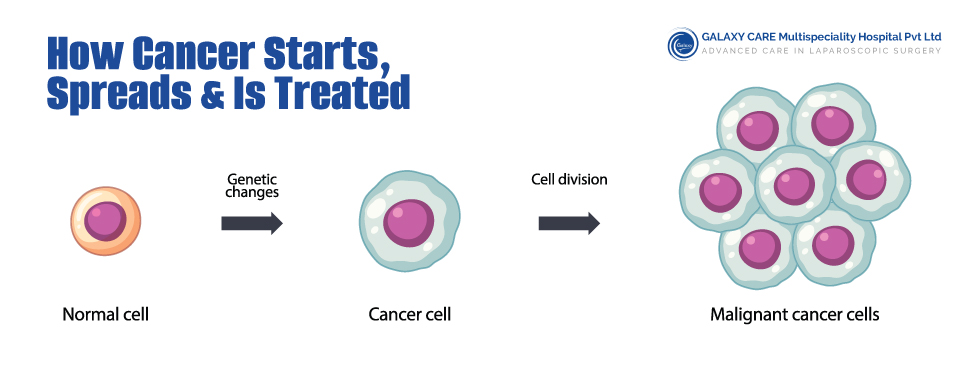
Cancer develops when certain cells in the body stop following the natural rules of growth. Normally, cells grow, divide, and die in a controlled manner. But when DNA inside a cell becomes damaged, the cell may start multiplying uncontrollably. Over time, these abnormal cells can form a mass called a tumor.
Think of your body as a well-organized community. When one member starts behaving unpredictably, it disturbs the harmony around it. That is exactly how cancer begins, with one cell refusing to function the way it should. Some tumors remain harmless, but cancerous tumors can invade nearby tissues and disrupt normal functions. Understanding this early stage is key to recognizing why timely detection matters so much.
Why Do Cells Become Cancerous?
It’s natural to wonder, “Why did this happen?” Cancer doesn’t have a single cause, but there are several risk factors. Everyday habits, the environment, infections, and even family traits can play a role. Sometimes, even people who live very healthy lifestyles can develop cancer, which shows how complex the disease truly is. The key is understanding these triggers so you can take control of what is in your hands.
Common Causes:
Lifestyle factors: Smoking, alcohol, an unhealthy diet, and a lack of exercise can all increase cancer risk. These habits slowly impact the body over time, often without noticeable signs.
Genetic factors: Sometimes, changes in our DNA passed down from our parents can make us more likely to develop cancer. While you can’t change your genes, awareness helps in early screening.
Environment: Pollution, radiation (even too much sun), and harmful chemicals in our surroundings may also contribute. Long-term exposure often plays a bigger role than we realize.
Infections: Certain viruses or bacteria have been linked with specific cancers. These infections may not feel serious at first but can affect cells over many years.
How Does Cancer Spread in the Body?
One of the most concerning aspects of cancer is its ability to spread beyond where it first started. This spreading process is called metastasis, and understanding it can help patients and families make sense of how cancer behaves inside the body.
Cancer begins in one area, the primary site, but cancer cells are different from normal cells. Instead of staying in place, they can break away from the original tumor and move to distant organs. These traveling cells carry the same characteristics as the original cancer, which is why breast cancer that spreads to the bones is still treated as breast cancer, not bone cancer.
So, how do these cells travel?
Cancer cells spread through two main pathways:
1. The bloodstream: Cancer cells can enter tiny blood vessels near the tumor. Once inside, they circulate throughout the body like passengers in a fast-moving train. If they find a place where they can settle and grow, they form a new tumor there.
2. The lymphatic system: The lymphatic system is a network of vessels that helps filter waste and fight infections. Cancer cells can move into lymph vessels and travel to nearby or distant lymph nodes. This is why cancer specialists often check lymph nodes to understand how far a cancer has spread.
What happens after cancer cells reach a new location?
When cancer cells settle in another organ, such as the lungs, liver, bones, or brain, they begin multiplying just like they did at the original site. These new growths are called secondary tumors or metastatic cancer. But here’s what many patients don’t realize: Metastasis doesn’t happen overnight. It is a slow, gradual process, often without any obvious symptoms. This is why many cancers are diagnosed at later stages, the spreading happens silently.
What Are the Treatment Options Available Today?
Cancer treatment has advanced tremendously over the past decade, giving patients more effective, safer, and highly personalized options. Today, cancer doctors design treatment plans based on the type of cancer, how early it’s detected, the stage, and the patient’s overall health. No two patients are exactly the same, which is why modern cancer care focuses on individuality and precision.
One of the most common treatments is surgery, where doctors remove the tumor and surrounding tissues to prevent further growth. For many early-stage cancers, surgery alone can be curative. Another major treatment is chemotherapy, which uses powerful medicines to destroy cancer cells throughout the body. While chemotherapy is known for its side effects, today’s improved techniques and supportive medications make it far more manageable.
Radiation therapy is another crucial option, using controlled, high-energy beams to target and shrink cancer cells without affecting healthy tissues. Some patients benefit from immunotherapy, an advanced treatment that boosts the body’s natural defense system, helping it recognize and attack cancer cells more effectively. There is also targeted therapy, which focuses specifically on the cancer-causing cells without harming normal cells, making it one of the most precise and promising approaches in modern oncology. For cancers that are influenced by hormones, hormone therapy is used to block or alter hormonal signals that help the cancer grow.
Each treatment works differently, and many patients require a combination of therapies to achieve the best results. With an experienced cancer specialist in Pune, patients receive not just medical treatment but compassion, clarity, and confidence throughout their journey.
You Can Win Over Cancer
Choosing the right healthcare partner is one of the most important decisions you will make in your cancer journey, and at Galaxy Care Hospital, we want you to know that you don’t have to walk this path alone. Every day, patients trust us because we combine advanced cancer treatments with genuine compassion and holistic care. With a highly experienced cancer specialist in Pune, we ensure that your treatment plan is tailored specifically to your needs, because your story, your health, and your future truly matter to us.
At Galaxy Care Hospital, you’ll find a cancer care team that listens, understands your concerns, and stands with you at every stage. Early detection and timely treatment save lives, and taking that first step toward expert cancer care can change everything. We’re here, prepared to guide you, reassure you, and help you move forward with hope and strength.
Seek consultation from the best cancer specialist in Pune at Galaxy Care Hospital. Book your appointment today!