Can Stage 4 Cancer Be Cured? Treatment, Survival and Hope
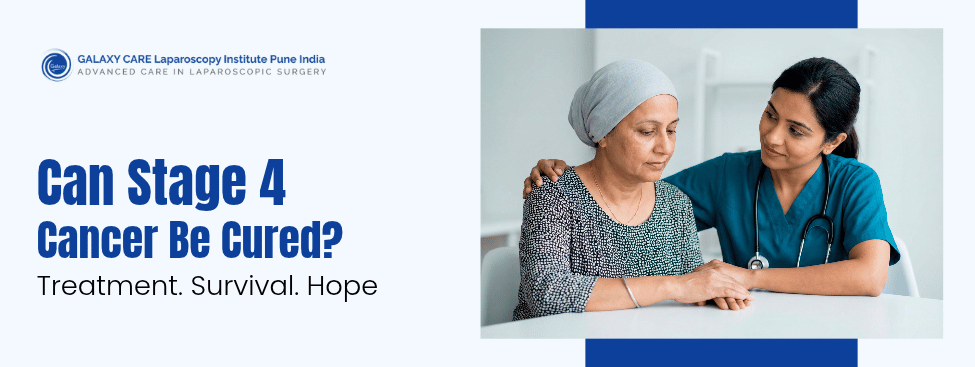
Hearing that you or someone you love has stage 4 cancer can be overwhelming. Suddenly, there are so many questions. How serious is it? What treatment options are available? How much time do we have? And perhaps the biggest question of all, can stage 4 cancer be cured?
The answer isn’t always straightforward. Stage 4 cancer is advanced, but that doesn’t mean treatment is no longer possible. With advances in cancer treatment, some patients can live for years with the disease under control, while a cure may still be possible in certain cases.
A lot depends on the type of cancer, how far it has spread, and how well the patient responds to treatment. At Galaxy Care Hospital, we’ve treated thousands of cancer patients from around the world. We firmly believe there is always reason for hope, even at stage 4. Let us help you understand what a stage 4 diagnosis means, the treatments doctors may recommend and what survival rates really tell us.
Can Stage 4 Cancer Be Cured?
The answer depends on the type of cancer and how far it has spread. In most cases, stage 4 cancer is difficult to cure, but it can still be treated. With the right treatment, some patients may live for years with the disease under control. In certain cases, especially when cancer has spread to only a few areas, long-term remission or even a cure may be possible.
What Does Stage 4 Cancer Mean?
Cancer specialists classify most cancers into stages from 1 to 4, depending on the size of the tumour and how far the disease has spread. In many types of cancer, 4th stage cancer means cancer cells have spread from the original tumour to distant organs, such as the lungs, liver, bones or brain. This is known as metastatic cancer.
Because the cancer has spread beyond its original location, treatment often needs to target cancer cells throughout the body rather than just one area.
Can Cancer Go Into Remission at Stage 4?
Yes, some patients with stage 4 cancer can achieve remission. However, it’s important to understand the difference between a cure, remission and disease control.
- Cure: The cancer has been successfully treated and is not expected to return.
- Remission: The cancer has reduced significantly or is no longer detectable. However, there is still a possibility of recurrence.
- Disease Control: Treatment helps stop or slow cancer growth, allowing patients to manage the condition for a longer period.
For many patients with advanced cancer, the main goal is to control the disease, manage symptoms and maintain a good quality of life.
Why Are Treatment Outcomes Different for Every Patient?
You may have heard about someone who lived for years after a stage 4 cancer diagnosis, while another patient had a very different experience. Why does that happen?
It’s because every cancer behaves differently. Oncologists consider several factors, including the type of cancer, where it has spread, the tumour’s genetic characteristics, the patient’s overall health and how well the cancer responds to treatment.
That’s why a stage 4 diagnosis alone cannot determine how long someone will live or how successful treatment will be. A detailed medical evaluation is essential to understand the available options and what can realistically be achieved.
Cancer Stage 4 Treatment Options
Treatment for stage 4 cancer depends on the type of cancer, how far it has spread and the patient’s overall health. Oncologists may recommend one treatment or a combination of treatments based on the patient’s condition.
1. Chemotherapy
Chemotherapy uses medicines to destroy cancer cells or stop them from growing. Since these medicines travel through the bloodstream, they can reach cancer cells in different parts of the body. It is commonly used to shrink tumours, slow disease progression and relieve symptoms in patients with advanced cancer.
2. Immunotherapy
Immunotherapy helps the body’s immune system recognise and fight cancer cells. It has shown promising results in certain advanced cancers, including some types of lung cancer, melanoma and kidney cancer. However, not every patient is suitable for immunotherapy. Doctors may recommend biomarker testing to determine whether it could be effective.
3. Targeted Therapy
Unlike chemotherapy, which can affect both cancerous and healthy fast-growing cells, targeted therapy acts on specific proteins or genetic changes that help cancer cells grow. Doctors may recommend molecular testing of the tumour to identify whether targeted medicines are suitable. This approach is used in certain cancers, including some breast, lung and colorectal cancers.
4. Radiation Therapy
Radiation therapy uses high-energy radiation to destroy cancer cells or reduce tumour size. In stage 4 cancer, it is often recommended to manage symptoms such as bone pain, bleeding or pressure caused by tumours. It may also be used to treat selected areas of cancer spread, including certain brain metastases.
5. Cancer Surgery
Many patients believe surgery is no longer possible once cancer reaches stage 4. However, that is not always the case. In selected patients, particularly when cancer has spread to only a few locations, surgery may be considered to remove tumours or manage complications.
Depending on the tumour’s location and the patient’s condition, minimally invasive cancer surgery, including robotic and laparoscopic cancer surgery techniques, may be an option. These procedures can offer benefits such as smaller incisions, less postoperative pain and shorter hospital stays in suitable patients.
However, surgery is not recommended for every patient with metastatic cancer. A detailed assessment is necessary to determine whether the expected benefits outweigh the risks.
6. Palliative and Supportive Care
Palliative care is an important part of advanced cancer treatment. It focuses on relieving symptoms such as pain, nausea, fatigue, breathing difficulties and emotional distress. It is important to understand that palliative care does not mean stopping cancer treatment. Patients can receive supportive care alongside chemotherapy, immunotherapy or other treatments to help maintain comfort and quality of life.
What Is the Cancer Stage 4 Survival Rate?
Most figures you see are five-year relative survival rates. They compare people with a certain cancer and stage to people in the general population, and show how many are alive five years after diagnosis.
What the numbers look like: There is no single survival rate for all stage 4 cancers. The American Cancer Society, using SEER data, reports these five-year relative survival rates for cancer that has spread to distant parts of the body.
- Breast cancer, about 32%
- Prostate cancer, about 38%
- Colon cancer, about 13%
Why statistics cannot predict your future: A percentage describes a group, not a person. It cannot account for your tumour biology, your fitness or how you respond to treatment. Some people live far longer than the average, and doctors cannot always predict who. Please do not treat a number online as your own forecast. Your oncologist, who knows your reports, is the right person to discuss this with.
Consult Galaxy Care Hospital in Pune for Advanced Cancer Care
A stage 4 cancer diagnosis can be difficult to accept, but getting the right medical advice at the right time can make a meaningful difference. Rather than assuming that treatment options are limited, speak with an experienced cancer specialist who can evaluate your condition and guide you through the available options.
At Galaxy Care Hospital in Pune, we understand the concerns patients and families face after an advanced cancer diagnosis.Dr. Shailesh Puntambekar, a surgical oncologist known for his expertise in minimally invasive cancer surgery, helps patients understand their diagnosis and explore suitable treatment options.
If you or a loved one has been diagnosed with 4th stage cancer, don’t delay seeking a specialist opinion. Come to Galaxy Care Hospital, discuss your reports, understand your treatment options and take the next step with greater confidence.