Breast Cancer Treatment Is Different for Everyone: Here’s Why
Hearing the words “you have breast cancer” can turn your world upside down. Along with the fear and shock, there’s often another overwhelming feeling: confusion. Why is one woman advised to have surgery first while another starts with chemotherapy? Why does one patient need radiation and another doesn’t?
If you or a loved one is going through this, you’re not alone in wondering why breast cancer treatment can look so different from patient to patient. At Galaxy Care Hospital, Pune, we believe you deserve clear, honest explanations, so you can feel more in control of your journey.
Although nearly 99% of breast cancer cases are seen in women and only 0.5–1% in men, the bigger truth is this: no two diagnoses are ever the same. Let’s explore why breast cancer treatment varies, and how these differences help create better outcomes for you.
1. Differences in Tumor Biology
Not all breast cancers are the same. Even though they start in the breast, the cells can behave very differently from one person to another.
Some breast cancers grow slowly, while others grow more quickly. Some are more likely to spread, while others are more contained. Breast cancer specialists look at features like hormone receptors (whether the cancer “feeds” on hormones like estrogen or progesterone) and HER2 status (a protein that can make cells grow faster).
These features help us group breast cancers into “subtypes.” Each subtype responds better to certain treatments. For example, hormone-positive cancers often respond well to hormone-blocking tablets, while HER2-positive cancers benefit from special targeted drugs.
Because your tumor’s biology is unique, your treatment plan is tailored to match it. This is not “one-size-fits-all” medicine; it’s personalized care built around your specific cancer.
2. Cancer Stage and Early Detection
Another big reason treatment differs is the stage of the cancer, that is, how big it is and whether it has spread to lymph nodes or other parts of the body.
- In early-stage breast cancer, treatment might focus on removing the tumor with surgery, often followed by radiation or medications to reduce the chance of it coming back.
- In more advanced stages, chemotherapy or targeted therapy may be given before surgery to shrink the tumor, or combined treatments may be needed to control the disease and protect other organs.
The grade of the cancer also matters. Grade describes how “aggressive” the cells look under the microscope, whether they look more like normal cells or very abnormal. Higher-grade cancers may require stronger or more intensive treatment.
This is why early detection is so powerful. When breast cancer is found at an earlier stage, treatment options are often simpler, less aggressive, and have a higher chance of long-term control or cure.
3. Age, Overall Health, and Personal Factors
You are not just a diagnosis, you’re a whole person. Your age, overall health, family responsibilities, work, and personal values all play a huge role in shaping your treatment plan.
For example:
- A younger woman may be more worried about fertility and long-term side effects.
- An older woman may have other health issues, like heart disease or diabete,s that we must consider while choosing treatments.
- Menopausal status also affects which hormone therapies are suitable.
Your medical team will weigh the benefits and side effects of each option with you. What is the main goal right now: to cure the cancer, to control it for as long as possible, or to relieve symptoms and improve comfort? At Galaxy Care Hospital, our compassionate breast cancer doctor in Pune considers your lifestyle, your support system, and what matters most to you before suggesting a plan.
4. Surgical Options and Advances
Surgery is often a key part of breast cancer treatment, but even surgical approaches vary. Some women may have breast-conserving surgery (lumpectomy), where only the tumor and a small margin of normal tissue are removed. Others may need a mastectomy, where the entire breast is removed.
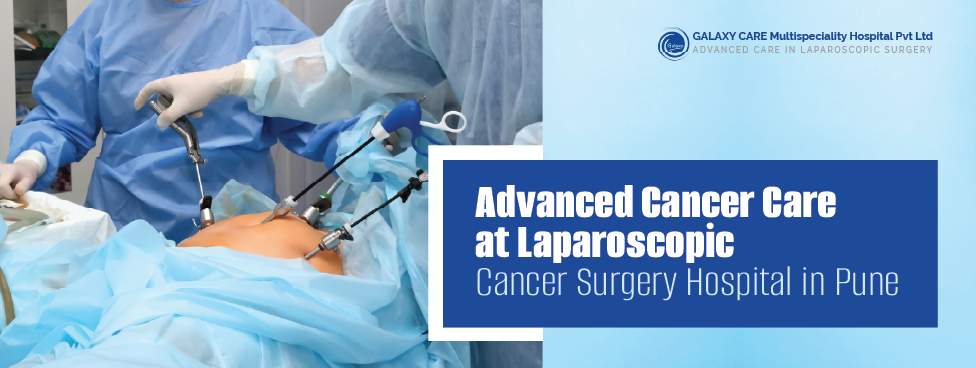
At Galaxy Care Hospital, we also use advanced techniques like laparoscopic and robotic surgery in appropriate cancer cases. These minimally invasive approaches may offer smaller cuts, less pain, and faster recovery in selected patients. Your surgeon will discuss whether such advanced options are suitable for your situation. Lymph node surgery can also differ. Some patients only need a few “sentinel” lymph nodes checked, while others may require more extensive node removal, depending on how far the cancer has spread. All of these decisions are made carefully to balance cancer control with preserving your body image, function, and long-term health.
5. Role of targeted therapies and personalized medicine
In recent years, breast cancer treatment has become far more precise. Instead of relying only on standard chemotherapy, doctors can now use molecular profiling, a detailed look at genes and proteins in the cancer cells, to guide treatment.
This helps identify:
- Whether targeted drugs (which “lock onto” specific cancer cell markers) will work
- Whether certain chemotherapy medicines are likely to be effective
- The risk of the cancer coming back after surgery
Targeted therapies and hormone therapies can often be given as tablets or injections and may have different side effect profiles than traditional chemotherapy. Your body’s response is monitored closely, and treatment can be adjusted if needed.
This is what people mean when they talk about “personalized” or “precision” medicine: the right treatment, for the right patient, at the right time.
Importance of multidisciplinary care
Because breast cancer is complex, no single doctor can manage everything alone. The best care comes from a multidisciplinary team, a group of specialists who work together on your case.
At Galaxy Care Hospital, we have:
- Surgical oncologists (cancer surgeons)
- Medical oncologists (chemotherapy and targeted therapy experts)
- Radiation oncologists
- Radiologists and pathologists (imaging and lab experts)
- Breast care nurses and counsellors
These experts meet, review your reports and scans, and create a joint treatment plan tailored to you. This teamwork ensures that you benefit from every angle of expertise and that nothing is overlooked.
When you meet a breast cancer specialist in Pune, you are really tapping into an entire network of cancer expertise.
Moving Forward with Breast Cancer Treatment
If all the different treatment options and medical terms feel overwhelming, remember this: the reason treatment varies is that it is tailored to your cancer and to you. That is a strength, not a weakness, of modern breast cancer care.
At Galaxy Care Hospital in Pune, our multidisciplinary team, state-of-the-art facilities and experience as a leading breast cancer specialist in Pune centre allow us to design treatment plans that are both effective and respectful of your life, your body, and your choices.
We are here to guide you step by step, from diagnosis and staging, through surgery, medical treatments, and follow-up, so you never have to walk this journey alone. If you or a loved one has noticed a breast change or has been advised to see a breast cancer specialist in Pune, we encourage you not to delay. Early, expert evaluation can open the door to more options and better outcomes. Book your appointment today.